
When you squint at road signs or hold your phone closer to read text, you might wonder what’s happening with your vision. These everyday struggles often point to common refractive errors that affect how your eyes focus light. Understanding these conditions is important for families seeking comprehensive eye care, especially when symptoms first appear.
The main difference between nearsightedness and farsightedness lies in what you can see clearly: nearsighted people see close objects clearly but struggle with distant ones, while farsighted people typically see distant objects more clearly but may have trouble with close-up tasks.
At McCauley Celin Eyecare Associates, we help families in the North Hills understand their vision needs with regular eye exams.
What Are Nearsightedness & Farsightedness?
How Your Eyes Focus Light
Your eye works like a camera to create clear images. Light enters through your cornea, passes through your lens, and focuses on your retina at the back of your eye.
When this system works perfectly, light focuses directly on your retina, creating sharp vision. Problems arise when light doesn’t land exactly where it should.
Nearsightedness (Myopia) Explained
Nearsightedness happens when your eye focuses light in front of your retina instead of directly on it. This usually occurs because your eyeball is too long or your cornea is too curved. Myopia affects millions of people worldwide and often develops during childhood.
The result is clear vision for nearby objects but blurry vision for things far away. You might easily read a book but struggle to see a street sign across the road.
Farsightedness (Hyperopia) Explained
Farsightedness is the opposite problem. It occurs when light focuses behind your retina. This typically happens when your eyeball is too short or your cornea doesn’t curve enough.
People with farsightedness often see distant objects more clearly than close ones. However, severe farsightedness can make both near and far vision blurry.
Key Differences Between These Vision Conditions
What You Can See Clearly
- Nearsighted: close objects are clear, distant objects are blurry
- Farsighted: distant objects are clearer, close objects may be blurry
These differences affect your daily activities in distinct ways. For instance, nearsighted people might sit closer to the TV, while farsighted people might hold books at arm’s length.
Where the Light Focuses in Your Eye
Where your eye focuses light determines your vision quality. In cases of nearsightedness, light converges too early and focuses in front of your retina.
With farsightedness, light hasn’t converged properly by the time it reaches your retina, creating a focus point behind it. Both conditions prevent sharp images from forming on your retina.
Age When Symptoms Typically Appear
Nearsightedness often develops during childhood and the teenage years, when eyes are still growing. You might notice your child squinting at the board in school or complaining about seeing distant objects. For families concerned about myopia progression, early intervention is key.
Farsightedness can be present from birth, but symptoms might not appear until later in life. Young eyes can often compensate for mild farsightedness, but this becomes harder as you age.
How to Tell If You’re Nearsighted or Farsighted
Common Signs of Nearsightedness
- Squinting to see distant objects
- Headaches from eye strain
- Difficulty seeing the board at school or road signs
- Sitting close to the TV or computer screen
These symptoms often develop gradually. Children with nearsightedness might not realize their vision has changed until parents or teachers notice their behavior.
Common Signs of Farsightedness
- Eye strain when reading or doing close work
- Headaches after reading
- Difficulty focusing on nearby objects
- Fatigue from close-up tasks
Symptoms of farsightedness often worsen throughout the day as your eyes become tired from working harder to focus. You might find that reading becomes more challenging in the evening. Modern lifestyles with increased digital eye strain can worsen these symptoms.
What Causes These Vision Problems
Why Nearsightedness Develops
Genetics plays a major role in the development of nearsightedness. If both parents are nearsighted, their children have a higher chance of developing the condition. Research shows that time spent outdoors may help reduce myopia risk in children.
Environmental factors also contribute, including prolonged close-up work and limited outdoor time. Modern lifestyles with increased screen time and indoor activities may influence nearsightedness rates.
Why Farsightedness Occurs
Most farsightedness is inherited and present from birth. Your shape and size of your eyes are largely determined by your genes.
Some people develop farsightedness later in life due to changes in their eye’s lens or cornea. Age-related changes can also make existing farsightedness more noticeable.
Risk Factors for Both Conditions
Family history remains the strongest predictor for both conditions. If your parents or siblings have refractive errors, you’re more likely to develop them too.
Age affects both conditions differently—nearsightedness often progresses while a person is still growing, while farsightedness tends to become more apparent with age. Regular eye exams help track these changes over time.
Treatment Options for Nearsightedness & Farsightedness

Prescription Glasses
Glasses remain the most common and effective treatment for both conditions. Concave lenses help nearsighted eyes by moving the focus point back onto the retina.
Convex lenses assist farsighted eyes by helping to light focus properly on the retina. Modern frames offer both style and function, making glasses an attractive option for all ages.
Contact Lenses
Contact lenses provide clear vision across your entire field of view. They work well for active lifestyles and sports participation.
Both soft and rigid contact lenses can correct nearsightedness and farsightedness effectively. Proper fitting and care are essential for comfortable, safe contact lens wear.
When Surgery Might Be an Option
Refractive surgery can permanently correct vision for some adults with stable prescriptions. LASIK and other procedures reshape your cornea to improve how light focuses in your eye.
Surgery works well for many people, but it’s not suitable for everyone. A comprehensive evaluation can determine if you’re a good candidate for vision correction surgery.
Getting Your Vision Checked in the North Hills
What to Expect During Your Comprehensive Eye Exam
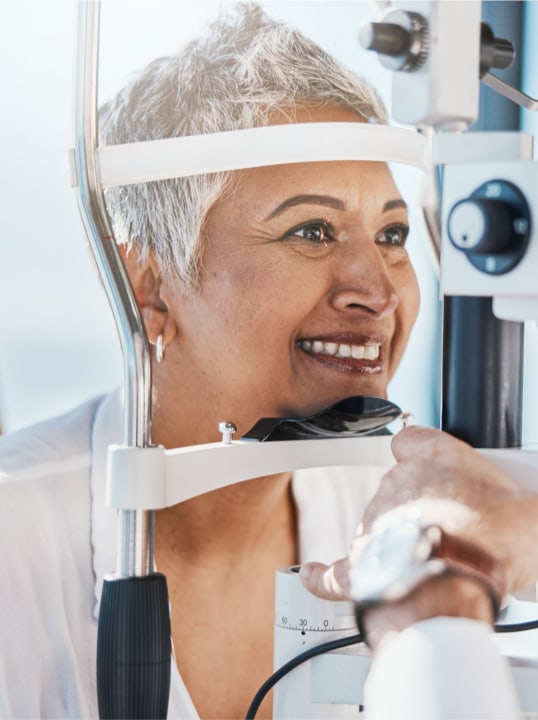
A thorough eye exam includes multiple tests to measure your vision and check your eye health. The process is comfortable and informative, and we’ll take time to explain your results and answer your questions. You will leave with a clear understanding of your vision needs.
Why Regular Eye Exams Matter for Your Family
Children’s vision changes rapidly as they grow, making regular exams important for detecting problems early. Adults also benefit from routine monitoring to track changes and maintain eye health.
Early detection and treatment can help preserve clear vision and prevent complications. Regular exams also help us adjust your prescription as your vision changes over time.
Schedule Your Appointment in Wexford, Perrysville, or Gibsonia
At McCauley Celin Eyecare Associates, we provide comprehensive vision care for your entire family. Our experienced team takes time to thoroughly assess your eyes and personalize solutions to your unique needs.
Visit us in Wexford, Perrysville, or Gibsonia for the professional eye care you deserve. Book your appointment today and take the first step toward clearer vision.